

What a Tub-to-Shower Conversion Costs in Reading PA
Reading's housing stock is older than most contractors from outside the area expect, and that age is the single biggest factor in what a tub-to-shower conversion actually costs. Most jobs in homes built after 1980 run between $3,500 and $7,000, but if you live in a row home near the GoggleWorks Arts Center or in Oakbrook, you are almost certainly dealing with something older.
Older Reading homes were built with mud-bed tile floors, cast iron drains, and galvanized supply pipes. Mud-bed demo alone adds hours. If the drain needs to move even a foot, you are opening the floor. Galvanized pipes that have not been replaced will fail pressure inspection and have to go. Rotted subfloor under a leaking tub is not rare in these houses. It is common. Each hidden problem, and there are usually several, adds another $500 to $2,500 to your final bill.
That is exactly the kind of thing worth a phone call before you start pulling anything apart. Call Webster Kitchen and Bath at (610) 763-0052 and describe your bathroom. We will tell you right away what range makes sense for your situation.
Any number without a site visit is a guess. A contractor needs to pull the tub, look underneath, and check the drain location before giving you a real price.
to set up an in-home estimate.
How Long Does the Job Take? Demo to Done
A straightforward tub to shower conversion in Reading takes 3 to 5 days from demo to finished tile. Day one is demolition and drain inspection. Days two and three are waterproofing, backer board, and tile work. The final day covers fixtures, the door or curtain rod, and cleanup.
Day 1
Demolition and drain inspection. We pull the tub and assess what is underneath before anything else begins.
Days 2 to 3
Waterproofing, backer board, and tile work. This is where the real transformation happens.
Final Day
Fixtures, the door or curtain rod, and cleanup. We leave your bathroom ready to use.
Complications add time. Subfloor rot gets repaired first. In older Reading homes, especially the row houses and cape cods built in the 1940s and 1950s, drain relocation can stretch the job by one or two days depending on what is hiding beneath the floor. The surprises pile up fast.
Do You Need a Permit in Reading for This Work?
Yes. Most tub to shower conversions in Reading require a permit. The City of Reading Bureau of Inspections requires one any time you relocate plumbing lines or touch structural elements. That covers most jobs in older row homes in Hampden Heights, Oakbrook, and similar neighborhoods.
Webster Kitchen and Bath pulls the permit for you. No City Hall visits. No forms to figure out. We handle it.
Unsure if your job needs one? That is exactly the kind of thing worth a quick phone call. Webster Kitchen and Bath can tell you right away.
with any questions about permits or scope.

What We Find When We Open the Walls in Reading Homes
Reading has countless homes built in the 1920s and 1930s. The neighborhoods near Reading Area Community College and Oakbrook are full of them. Character comes with a price. Original plumbing was never designed for a modern shower.
Supply Lines
Galvanized steel pipes from that era corrode inside. The opening narrows over decades. A shower valve needs decent pressure, and corroded galvanized pipe chokes that down. We replace it when we find it.
The Floor
Original cast iron tubs sit on a mud-bed base. That mortar is heavy and takes real time to break out. It adds to the dumpster haul and your bill. We tell you upfront before demo starts.
The Drain
Cast iron drain lines were set for a tub, not a centered shower drain. We often have to cut and re-route. Not a crisis. Just older-home reality. Our crews have done it more times than we can count.
The Drain Relocation Problem Nobody Talks About
A tub drain sits at the end wall. A shower drain sits in the center. Different locations. That gap is where costs climb.
In many older Reading homes, brick rowhouses and twin homes built before 1960, drain lines under the floor are cast iron. Some homes in Oakbrook and Hampden Heights sit on concrete slabs. Either way, moving the drain means cutting into the floor, re-routing the pipe, and closing everything back up. Real labor. Real material cost.
Some conversions work with a linear drain positioned near the original location. This solves it in some layouts. Not all. Every floor is different.
Drain relocation surprises are the most common reason a bathroom budget goes sideways. That is exactly the kind of thing worth a phone call before you start pulling anything apart. Reach Webster Kitchen and Bath at (610) 763-0052 and we will walk you through what your floor layout means for your quote.

Ventilation and Moisture: The Problem Reading Homeowners Miss
Most pre-1960 row homes in neighborhoods like Buttonwood and Millmont were built without exhaust fans. Some have one that vents into the wall cavity instead of outside. That is a serious problem when you convert a tub to a shower.
A tub gets used and drained in minutes. A shower produces sustained steam for 10 to 15 minutes every single use. That moisture has to go somewhere. In poorly ventilated bathrooms, it seeps into your grout, drywall, and framing, sometimes undetected for months.
Pennsylvania humidity is relentless from spring through fall. Freeze-thaw cycles through winter do their own damage. Mold often blooms the following spring when no one is looking for it yet.
Aging in Place: Walk-In Showers, Grab Bars, and What ADA Guidelines Actually Mean for Your Bathroom
A lot of homeowners ask about ADA requirements for a safer bathroom. Here is the honest answer. ADA guidelines are written for commercial buildings, not residential homes. You do not have to hit every spec exactly. But those guidelines work as a useful starting point for what actually functions well.
Barrier-Free Entry
No curb to step over means no fall risk. This is one of the two features that make the biggest real-world difference in a safer bathroom.
Fold-Down Bench
A bench means you can sit while you shower, which matters more than most people realize until they need it.
Properly Anchored Grab Bars
Grab bars are only as good as what they anchor to. A bar screwed into drywall will pull right out under weight. We anchor every bar into studs or solid blocking. If blocking is not there, we install it before we close the wall.
Planning a bathroom for someone with limited mobility, or just thinking ahead? That conversation is worth having before tile goes up. Call (610) 763-0052 and we will walk you through the options that actually make a difference day to day.

Should You DIY a Tub-to-Shower Conversion?
You can learn to set tile and install a prefab surround. Plenty of handy homeowners do it. Drain relocation, supply line work, and vent stack modifications are a different story entirely.
In Reading's older housing stock, the row homes and brick twins throughout Oakbrook, Hampden Heights, and the Northeast side, the wall behind your tub is rarely what you expect. Galvanized pipes. Rotted subfloor. Missing blocking. Outdated drain configurations. Our crews find at least one of these on almost every older home we open.
Before you start pulling anything out, call Webster Kitchen and Bath at (610) 763-0052. Get a straight read on what your job actually involves. No pressure. Just honest information from a crew that has opened up plenty of these bathrooms before.
Why a Walk-In Shower Also Makes Sense If You Are Selling or Renting
If you are updating a home near Reading Area Community College to sell or rent, the original tub is not doing you favors. Faculty renters and younger tenants rarely use one. A walk-in shower with clean tile signals an actual update, not just cleanup.
It Photographs Better
In a single-bathroom home, a tiled walk-in shower photographs better than a reglazed tub from 1955, making your listing stand out online.
It Shows Better
Buyers respond better to tiled walk-in showers than to reglazed vintage tubs. It shows better and removes a common objection before the showing even starts.
Fewer Objections
A walk-in shower signals a genuinely updated bathroom to buyers and renters, not just a cosmetic touch-up, which removes hesitation during the decision process.
Before you list, let's talk about what makes sense for your property and your timeline.
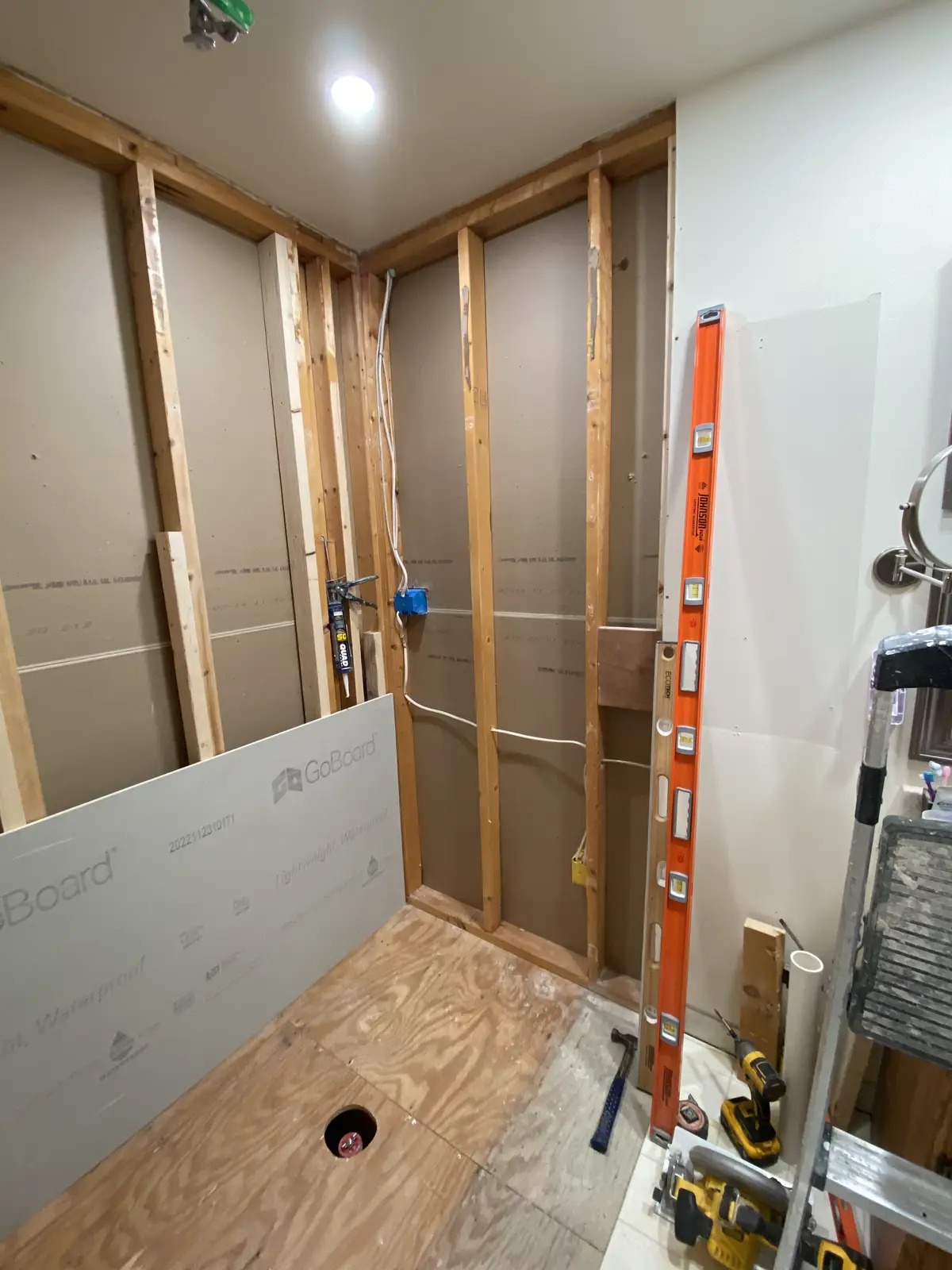
Why Reading Homeowners Work With Webster Kitchen and Bath
We work in these houses constantly. The brick row homes in Hampden Heights. The cape cods near Antietam Lake. The twins in Oakbrook. We know what 1940s plumbing looks like behind a finished wall because we have seen it hundreds of times. That familiarity means fewer surprises on your job and faster answers when something unexpected turns up.
We pull our own permits. We do our own waterproofing. We do not hand off after demo. The same crew that tears the tub out sets your tile and installs your fixtures. One company from start to finish. That matters when problems come up, and in older Reading homes, something almost always does.
We are not the cheapest option in Reading. We are the right one. The job gets done correctly the first time, so you are not calling someone else six months later to fix mold growing behind brand new tile.
Talk to Webster Kitchen and Bath Before You Commit to Anything
Call and describe your bathroom. Age of the home. What you have now. What you want to change. We will tell you right away whether the job sounds straightforward or whether complications are worth knowing about before anyone drives out.
If you are still thinking about grab bars, a fold-down bench, or whether your one bathroom can handle being out of service for a week, those are exactly the questions Webster Kitchen and Bath is set up to answer. Call (610) 763-0052 and get a straight read from a crew that has opened up hundreds of older Reading bathrooms and knows what to expect before the first tile comes off the wall.