

Is Cabinet Painting Worth It? The Short Answer for Reading Homeowners
Yes. For most Reading kitchens, cabinet painting is absolutely worth it - a fraction of the cost of full replacement with a finish that looks brand new when done right.
Reading homeowners are spending real money tearing out cabinet boxes that have another 30 years of life in them. The row homes near Reading's historic districts, especially the pre-1950s builds in the Callowhill and Buttonwood neighborhoods, often have original wood cabinet boxes that are still dead square and rock solid. The finish is shot. The boxes are not. Ripping out structurally sound cabinets is a waste of money.
We look at the boxes first. If the frames are square, the wood is dry, and the doors close right, painting is the smarter call. If something is warped, rotted, or falling apart, we tell you that before you spend a dime. No pressure. No upsell.
Not sure which category your kitchen falls into? That is exactly the kind of thing worth a phone call. Call Webster Kitchen and Bath at (610) 763-0052 and we will give you a straight answer in minutes.
What Does Cabinet Painting Cost in Reading PA?
Most cabinet painting jobs in Reading fall somewhere between $1,200 and $4,500. That range exists because no two kitchens are the same - the number of doors and drawer fronts, the cabinet material, the condition of the current finish, and whether you need new hardware all push the price up or down.
Prep work is the biggest variable. Older kitchens in Berkshire Heights and Exeter Township often have cabinets that are 30 to 50 years old, some with three or four layers of old paint or finish built up over the decades. Stripping that down correctly takes real time, and that time shows up in the price. We are not going to skip it and hope nobody notices.
Heavily damaged surfaces cost more. Dented wood. Chipped edges. Old latex over oil-based primer. We address it all before we pick up a brush. Trying to figure out where your kitchen lands on that range? That is a five-minute conversation, not a form to fill out.
We do not quote off a formula on a website. We walk your property, look at what is actually there, and give you a number that reflects the real job.
The Day-by-Day Timeline: What Actually Happens and When
Most homeowners want to know one thing: how long will my kitchen be torn apart? Here is the honest answer.
Prep
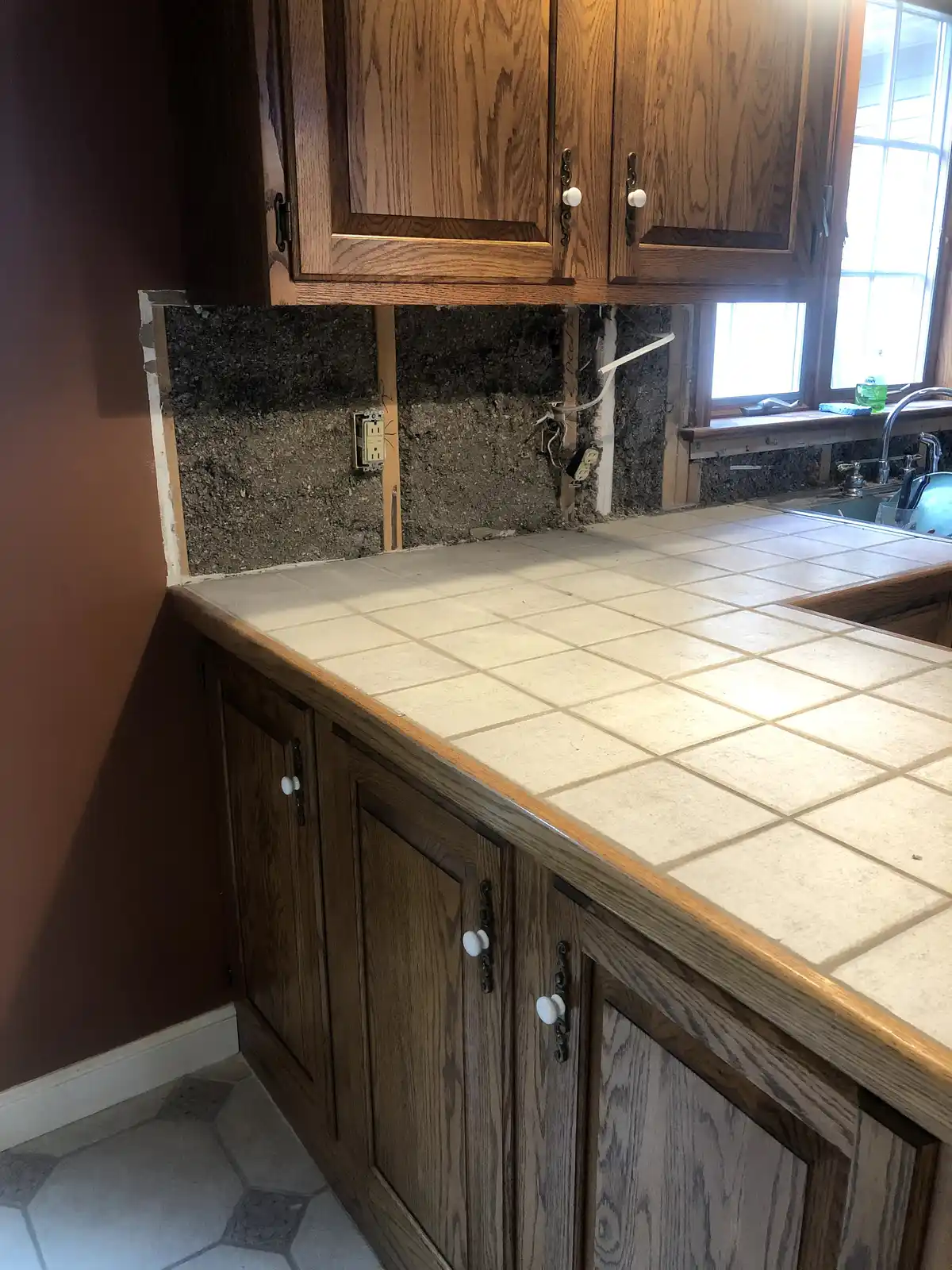
We pull the cabinet doors off, remove all hardware, and set everything in a staging area. Then we clean every surface to strip grease and grime. After cleaning comes sanding, then we fill any dents, dings, or old screw holes. Prep is the least glamorous part of this job and also the most important. A finish that lasts 10 years starts here.
Prime
Every surface gets a bonding primer before a single coat of paint goes on. Skipping primer is how you end up with paint that peels in two years. We do not skip it.
Finish and Cure
We apply finish coats in controlled passes and let each coat dry fully before the next one goes on. Rushing this step creates brush marks and uneven color. Once the final coat is down, there is a cure window before we reinstall doors and hardware. The full sequence takes 4 to 6 working days, depending on your kitchen size and the drying conditions that day.
You will have limited kitchen access during the project. Reading homes in late spring and summer actually help here since lower humidity speeds dry times. We will tell you exactly which days are the worst for access so you can plan meals around it.
Why Prep Work Is the Whole Job
Grease and old finish contamination are the number one reason cabinet paint peels. It does not matter how good the paint is. If the surface is not clean and properly scuffed, nothing bonds to it. The finish looks fine, then starts lifting at the edges within a year.
We clean every surface, degrease it, sand it, and fill any holes or dings before primer ever touches the wood. That sequence is not optional. Skip any one of those steps and you are just putting new paint on top of a problem, a temporary fix disguised as a solution.
Our crews have been called in to fix exactly that more times than we can count. If a cabinet paint job has already failed on you, that is exactly the kind of thing worth a phone call. Call (610) 763-0052 and we will tell you what went wrong and what the right fix looks like.
Good prep takes time. It is not glamorous, the homeowner does not see it happening, but it is the whole reason a finish holds up for ten years instead of falling apart in two. That is where we spend most of our time.
How We Keep Cabinet Paint from Chipping in a Kitchen That Gets Daily Use
The finish we use is not wall paint. It is hard-cure, purpose-built for cabinets.
Purpose-Built Product
Wall paint stays slightly flexible after it dries. Cabinet doors take constant contact, and that flexibility turns into chipping and scratching fast. The chemistry is completely different, and the durability is not comparable.
Spray Application
We spray cabinet doors instead of brushing or rolling them. A sprayed film lays down more evenly and bonds more tightly than a brushed coat. You also avoid brush marks, which trap dirt and wear down faster. The result is a harder, smoother surface that holds up to daily cooking and cleaning.
Proper Cure Window
Dry-to-touch is not the same as fully cured. Most cabinet finishes feel dry within hours but take days or even weeks to reach full hardness. We give you a specific cure window before we leave the job, with exact instructions on how to treat the cabinets so the finish hardens properly.
Pennsylvania Seasons and Your Cabinet Finish: What Reading Homeowners Need to Know
Reading's climate is hard on cabinet finishes. Summers here get humid enough that wood absorbs moisture and swells. Winter comes, the forced-air heat kicks on in your row home, and that same wood dries out and shrinks. That cycle repeats every single year.
Older cabinet stock in Berkshire Heights and Exeter Township is especially vulnerable. That wood has been expanding and contracting for decades, the grain is set in its patterns, and any coating has to be flexible enough to move with it. That starts with the right primer and the right topcoat for wood that has some history.
We also pay attention to the weather on coat days. Paint applied when humidity is too high will not cure correctly. Pennsylvania's freeze-thaw swings and dry winter heat are not a problem if you plan around them. We do. Unsure if your cabinets can handle another Reading winter? That is exactly the kind of thing worth a phone call. Call (610) 763-0052 and we will walk you through it.
Color Matching and What You Can Actually Choose
We are not locked into a set palette. Match Benjamin Moore. Match Sherwin-Williams. Match any color you bring us as a paint chip, a photo reference, or an exact paint code.
Any Color, Any Source
If you found a color you love on a design site or a magazine clipping, bring it in and we will get the match right before any work starts.
Matching Existing Trim
Matching existing trim or cabinetry in another room is common. Bring a chip or a photo to the consultation and we will dial it in. Getting the color right before we start saves everyone time.
Sheen Selection
A flat finish looks clean but does not wipe down well in a busy kitchen. A semi-gloss holds up to grease and moisture but shows surface imperfections more. We will walk you through which sheen makes sense for how your kitchen actually gets used.
The Hardware Decision: Paint It, Replace It, or Leave It
Painting existing hardware is possible. Some homeowners want to keep their original pulls and knobs to save money. But hardware takes more wear than any other surface in the kitchen.
Painted hardware wears faster than the cabinets themselves. The finish will chip and show wear sooner than you would like.
If you decide to swap out your hardware, timing matters. New pieces need to go on after the cabinet finish has fully cured, not before. Putting hardware on fresh paint will damage the surface before you ever use the kitchen. We coordinate that install sequence so you do not end up with marks on a brand new finish. Not sure whether to paint or replace your existing hardware? That is exactly the kind of thing worth a phone call.
Why Webster Kitchen and Bath
We have been doing this work in Reading and Berks County since 1998. Long enough to know what actually fails and why. We are not a painting crew that added cabinets to a service list. This is the work we do every day, in Callowhill row homes, in Berkshire Heights ranchers, in Exeter Township colonials with original cabinetry that nobody wants to replace. We know the wood types, the old finishes, and exactly what Reading's seasonal humidity does to a coat that was not applied correctly. When we give you a quote, it reflects the real job in front of us, not a number pulled from a price sheet. When we tell you the finish will hold, it is because we have done this enough times to know the difference between a job done right and one that just looks right on day one.

Spring Is the Right Time to Do This. Here Is Why.
Spring in Reading moves fast. Graduation parties, backyard cookouts, family get-togethers. Homeowners near Reading Area Community College are already thinking about who is coming through the door in June.
How to Keep Your Cabinet Finish Looking Good for Years
The finish does the work. You just have to avoid beating it up.
Wipe Spills Promptly
Wipe spills and grease off the cabinet faces as soon as you see them. Cooking residue that sits overnight is one of the fastest ways to dull a finish.
Use the Right Cloth
Use a soft damp cloth. That is it. No abrasive scrub pads, no harsh kitchen sprays, nothing with a warning label about surfaces. Those products will cut through the finish faster than years of normal use ever would.
Respect the Cure Window
Give the finish the full cure window before you start heavy cleaning. We will tell you exactly when it is ready. Most homeowners are surprised how little maintenance is actually needed once the finish is fully hard.